Financial Hackathon for Circular Textiles
Six Dutch recyclers within the Dutch Recycle Group are joining forces to secure funding for the transition towards a circular textile value chain in the Netherlands and Europe. Will you join us on 30 June for this financial hackathon?
Bridging the Funding Gap
During this exclusive afternoon, the Dutch Recycle Group (DRG) will present the funding needs of the Dutch recycling sector, the individual business cases and funding requests of the participating recyclers, and the business models and opportunities the Netherlands can build on as a leading example in Europe.
The shared ambition is to maintain and further strengthen the Netherlands’ leading position in circular textiles by developing suitable financing models and collaborative structures together with potential investors.
Would you like to be part of this afternoon? We would be happy to hear from you. Spots are limited, and participation is by personal invitation only.
Continue reading below the image for more information ↓
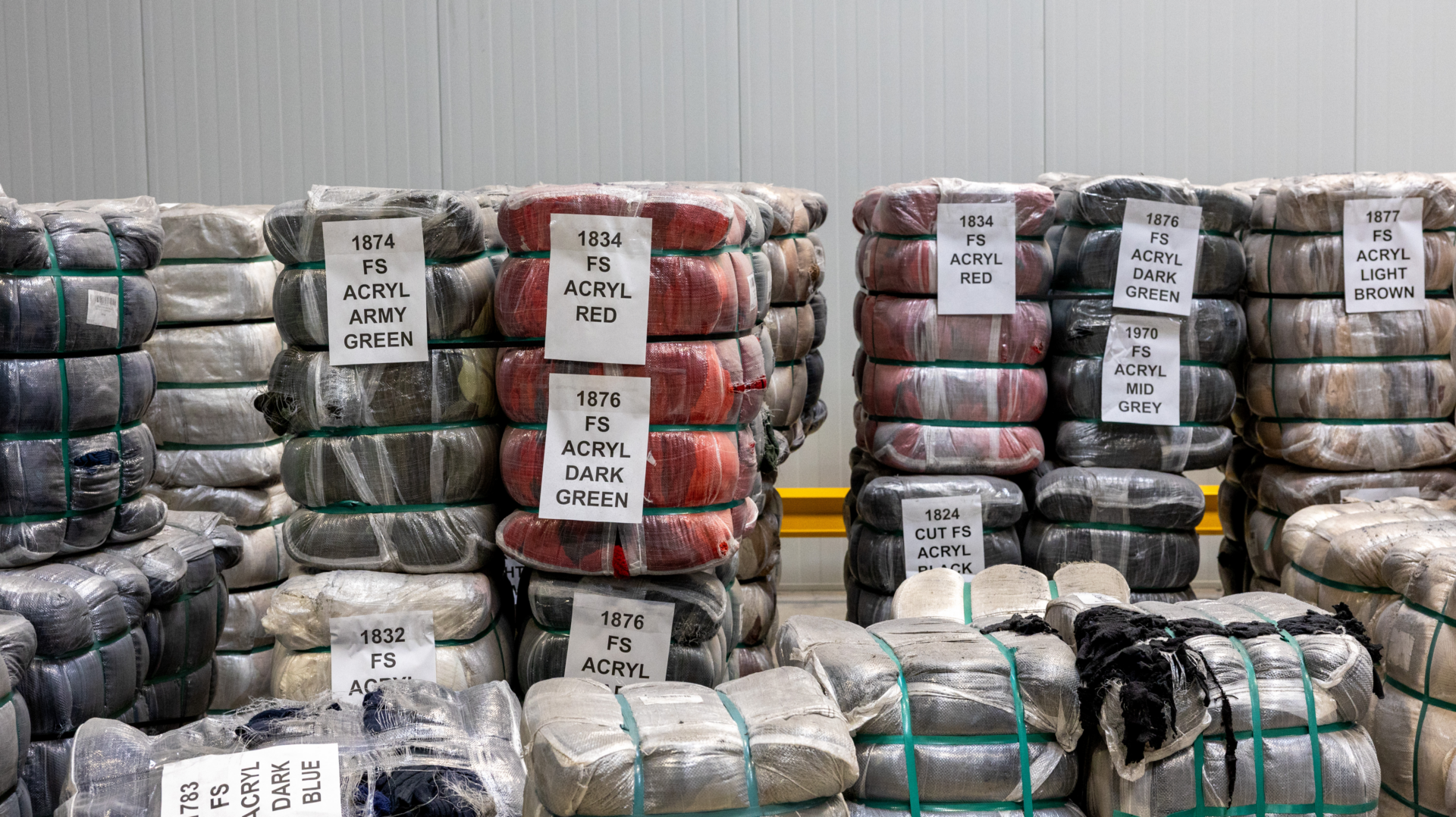
The Netherlands wants to maintain and strengthen its leading position
The Netherlands holds a strong international position in circular textiles and textile recycling.
Our country not only has a long history in textile collection, sorting and the resale of second-hand clothing, but was also one of the first countries in Europe to introduce Extended Producer Responsibility (EPR) legislation. This legislation makes producers responsible for waste streams and requires them to process discarded clothing into new collections.
The sharp increase in circular raw materials, the new EPR legislation and the Netherlands’ historic knowledge and expertise — as a former international player in textile production and trade — have created fertile ground for new business models, innovation and entrepreneurship within the circular textile industry.
As a result, compared to other countries, the Netherlands has developed a stronger group of companies working across chemical and mechanical recycling, spinning, and the production of end products made from discarded, non-rewearable clothing.
In short, the Netherlands is a leading example and attractive innovation zone for circular textiles in the EU and worldwide.
A challenging time for the fashion and recycling sectors
At the same time, our sorting and recycling sector is under serious pressure.
One of the main reasons is the rise of ultra-fast fashion, which has led to extremely low prices and a highly competitive market. As a result, even a small premium for sustainable circular products has become increasingly difficult for fashion brands to absorb.
Ultra-fast fashion also results in garments of increasingly lower quality, making reuse often no longer possible. As a result, the textile waste mountain continues to grow — precisely the problem we are collectively trying to solve.
Investment is crucial for the future of the sector
Current geopolitical developments are also driving up transport costs for second-hand clothing and limiting access to certain export markets, as some countries temporarily close their borders. These developments are putting additional pressure on the sector, while also restricting the innovation capacity that is urgently needed right now.
For the sorting sector, further innovation is needed to enable full automation with AI and robotics, both for reuse and recycling. This is crucial to reduce labour costs and to process textile residual streams for reuse, remake and recycling more efficiently and at higher value.
For recyclers, these additional investments are also essential, including investments in fine sorting and pre-processing for recycling, more advanced production processes, AI-driven machine intelligence, product engineering, logistics, and stockholding. Only through investment can the sector scale towards a future-proof and economically viable circular textile system.
Those who step in now can lead tomorrow
The transition towards circular textiles has already left the station — and there is no turning back. With Extended Producer Responsibility (EPR) becoming mandatory in all EU countries in 2027, the new Ecodesign for Sustainable Products Regulation (ESPR) and the arrival of the Digital Product Passport, the textile sector is set to transform at record speed.
This is no longer a distant future: within the next three years, alongside growing government concern about the expanding textile waste mountain, this regulatory pressure will drive an exponentially increasing demand for circular products and the technical solutions needed to deliver them.
Those who step in now can lead tomorrow. And the remarkable thing is: the Netherlands already has the knowledge in place.
Dutch Recycle Group is looking for bold financiers
The Netherlands risks losing its leading position in circular textiles and needs transition finance now to bridge the next two to three years.
That is why six Dutch recyclers within the Dutch Recycle Group are joining forces as an innovative ecosystem to jointly raise funding for the next phase of the circular textile industry.
The Dutch Recycle Group is looking for bold financiers, innovative financial structures and strategic collaborations with funds, private investors and banks to help make the roadmap towards circular textiles possible.
During this afternoon, the recyclers will not only present their individual business cases and funding needs, but also show the economic, sustainable and strategic opportunities that circular textiles can offer the Netherlands.
Together with people who are serious about making an impact, we will have an in-depth conversation about what is possible.
The goal is clear: to jointly arrive at concrete solutions and suitable financing in the short term, enabling the sector to move into its next phase.
Expect an inspiring, insightful and energetic afternoon full of innovation, entrepreneurship and new collaborations. Registration is possible, but participation is by personal invitation only.
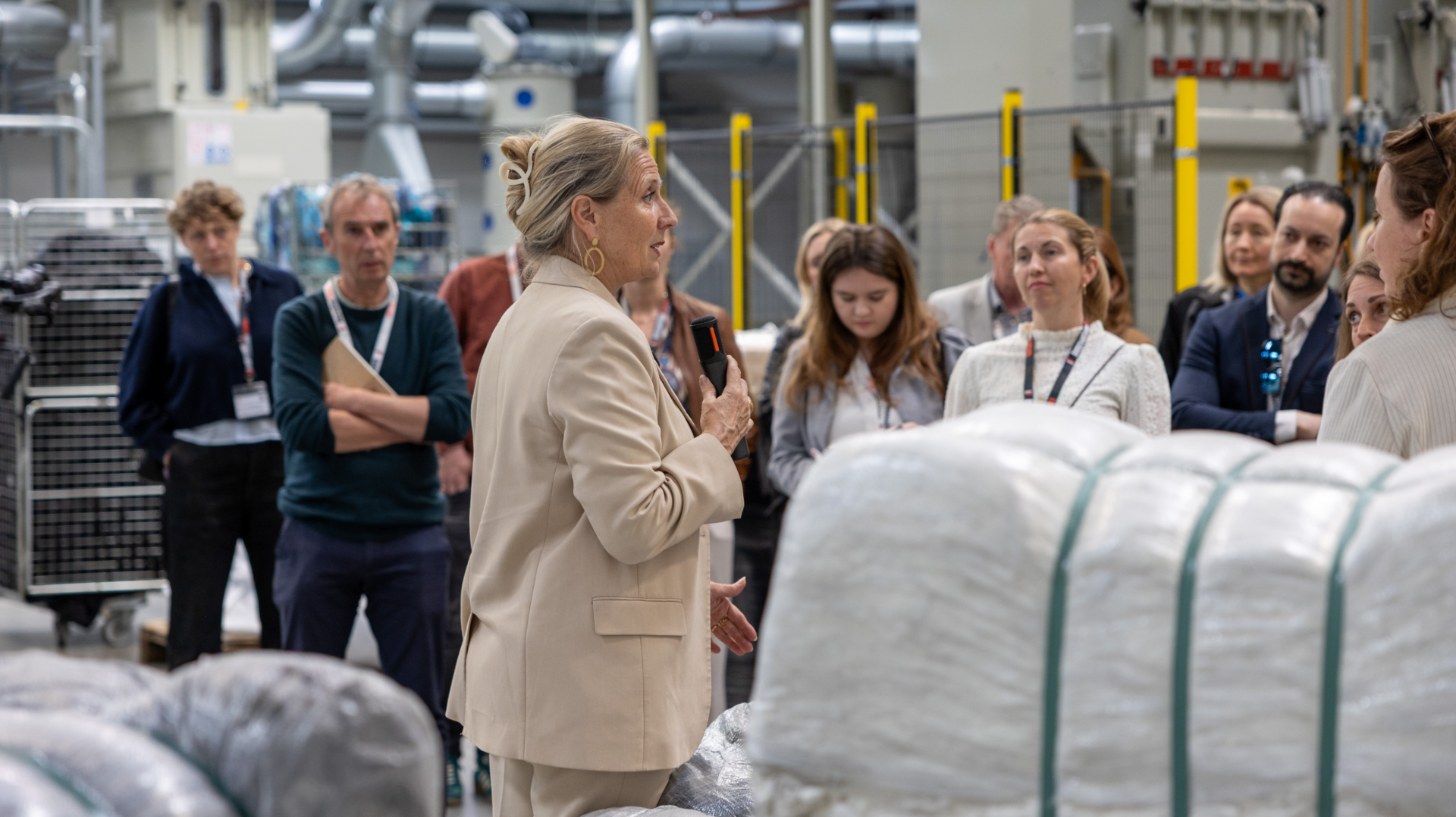
Are you willing and able to contribute to the next phase of circular textiles in the Netherlands?
On 30 June 2026, we will bring together recyclers, investors, funds, banks and policymakers around one urgent question: how do we finance the scale-up of a sector the Netherlands needs in order to maintain its leading position?
Register your interest for this exclusive afternoon and explore the role you could play in enabling concrete financial solutions for circular textiles.
Please note: places are limited and participation is by personal invitation only.